

Mobile Chicken Coop: Complete DIY Building Guide for Backyard Keepers

Tired of seeing those $500-$2000 price tags on pre-built chicken coops that don’t quite fit your needs? You’re not alone. Many backyard chicken keepers face this frustrating reality when trying to provide quality housing for their flock. The good news? Building your own mobile chicken coop is more achievable than you might think – and it can save you hundreds of dollars while giving you exactly what you want.
In this comprehensive guide, we’ll walk through everything you need to know about mobile chicken coops – from understanding the key benefits and different design options to a step-by-step overview of the building process. Whether you’re a complete beginner or have some DIY experience, you’ll discover how to create a functional, durable mobile chicken coop that your chickens will love.
For more housing options, check out our Chicken Tractor Alternatives Guide
What Is a Mobile Chicken Coop?
A mobile chicken coop (also called a chicken tractor, portable coop, or movable hen house) is a lightweight, non-permanent structure designed to be relocated around your property. Unlike traditional fixed coops, these portable housing units can be moved daily, weekly, or as needed to provide your chickens with access to fresh grass, bugs, and foraging opportunities.
The concept combines the safety of a secure coop with the benefits of free-ranging, without the drawbacks of either option alone. Mobile chicken coops typically include all the essential elements of a stationary coop – nesting boxes, roosting bars, and protected space – but with added mobility features like wheels, lightweight materials, or handles for easy movement.
The key characteristics that define a good mobile chicken coop include :
- Lightweight yet sturdy construction that can withstand weather and predators
- Mobility features (wheels, skids, or handles) that allow one or two people to move it easily
- Proper ventilation while maintaining protection from elements
- Appropriate space for your flock size (typically 3-4 square feet per bird minimum)
- Access to both secure shelter and outdoor foraging space
These versatile structures have become increasingly popular among backyard chicken keepers who want to maximize the health benefits of pasture-raised chickens while maintaining control over where their flock roams.

A typical mobile chicken coop allows chickens to access fresh pasture while remaining protected
Benefits and Advantages of Mobile Chicken Coops
Building a mobile chicken coop offers numerous advantages over traditional fixed coops. Here are the key benefits that make these portable structures worth considering for your backyard flock:
| ✓ Healthier Chickens | ✓ Better Egg Quality |
| Moving your coop regularly gives chickens access to fresh grass, insects, and clean ground. This natural diet supplementation results in healthier birds with stronger immune systems and fewer disease issues. Many chicken keepers report fewer parasite problems when using mobile coops compared to stationary setups. | Chickens with access to fresh pasture produce eggs with deeper colored yolks, higher nutritional content, and better flavor. Studies have shown that pasture-raised eggs contain more omega-3 fatty acids, vitamins A and E, and less cholesterol than conventional eggs. |
| ✓ Natural Lawn Maintenance | ✓ Reduced Feed Costs |
| Your chickens become natural landscapers, eating weeds, grass, and insects while fertilizing your lawn as they go. This symbiotic relationship helps maintain your yard while providing optimal nutrition for your birds. One mobile coop can help maintain approximately 1/4 acre of land per year. | When chickens forage for a portion of their diet, they consume less commercial feed. Many mobile coop users report 20-30% savings on feed costs compared to confined chickens. For a small flock of 6-8 birds, this can translate to $100-$150 in annual savings. |
| ✓ Predator Protection | ✓ Soil Regeneration |
| A well-designed mobile coop provides better protection than free-ranging alone. The secure structure keeps chickens safe at night while allowing supervised foraging during the day. This balanced approach significantly reduces predator losses while maintaining the benefits of pasture access. | Rotating your coop prevents the soil degradation and nutrient buildup that occurs with fixed coops. Chickens naturally till, fertilize, and manage pests in each area they visit, improving soil health throughout your property. This makes mobile coops particularly valuable for gardeners and homesteaders. |
| ✓ Flexibility and Adaptability | ✓ Easier Cleaning and Maintenance |
| Mobile coops can be positioned strategically around your property as needed – near the garden for pest control, on overgrown areas for clearing, or in shaded spots during hot weather. This adaptability makes them ideal for changing seasons and evolving property needs. | With regular movement, droppings are distributed across your yard rather than accumulating in one area. This natural distribution means less frequent deep cleaning and better odor control. Most mobile coop users only need to perform deep cleaning 2-3 times per year versus monthly for stationary coops. |
Types of Mobile Chicken Coops
Mobile chicken coops come in various designs, each with unique advantages depending on your specific needs, space constraints, and flock size. Here are the most popular options to consider:
A-Frame Chicken Tractors
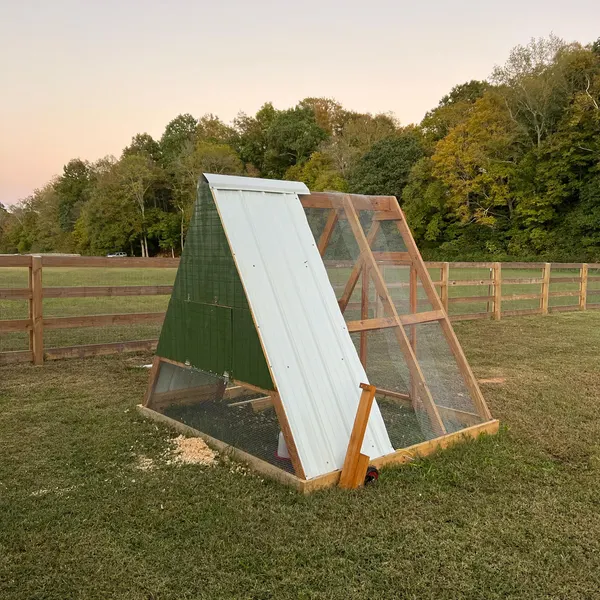
A-frame coops feature a triangular design that’s lightweight and easy to move. The sloped sides provide protection from rain and predators while creating a natural roosting area at the top. These typically include a protected sleeping area and an attached run in one integrated unit.
Best for: Beginners, small yards, and those with just a few chickens who want an affordable, easy-to-build option.
Chicken Arks
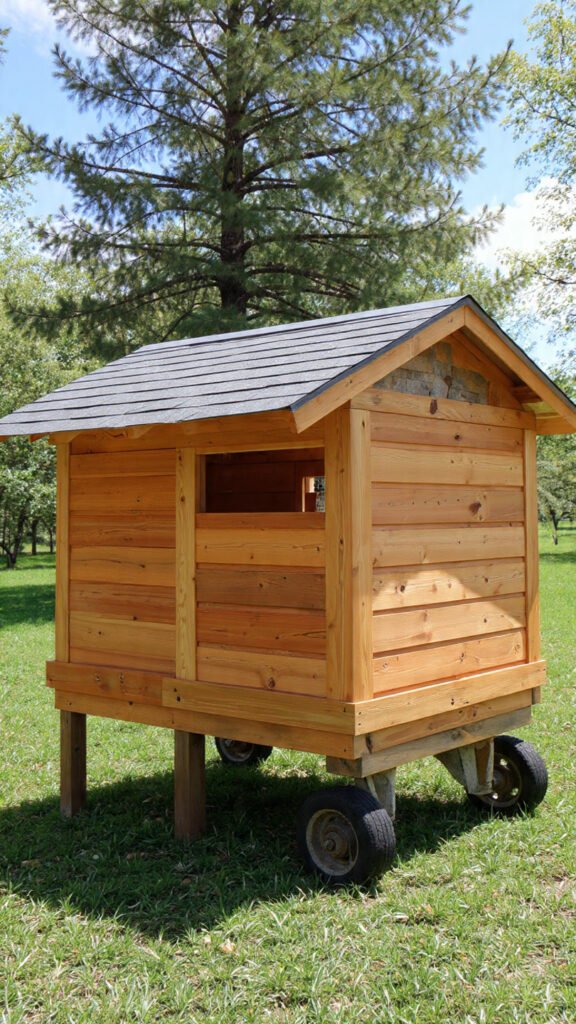
Description:
Chicken arks feature an elevated housing area with an enclosed run underneath. This space-efficient design maximizes the available area while keeping chickens safe. The raised sleeping quarters provide additional protection from ground predators and moisture, while the run below offers foraging space.
Best for: Those with limited space who want to maximize protection and functionality in a single structure.
Hoop Coops
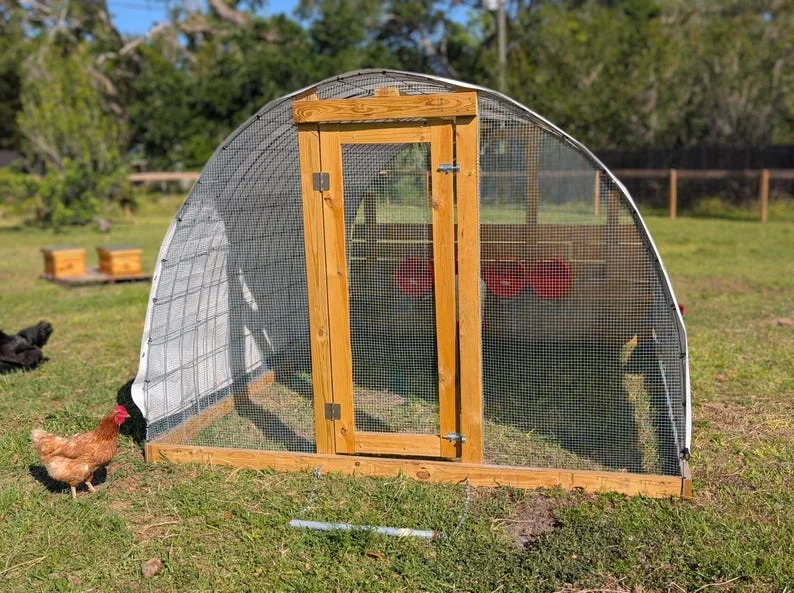
Unlike traditional forms of chicken housing, hoop coops are lightweight, portable structures consisting of a metal or PVC pipe frame covered with a tarp or plastic sheeting, and that is built with a rounded, beaded greenhouse-style curve. Often kept on skids, they are easily movable and very versatile. Also, they are efficient for housing chickens because their rounded beams allow for optimal height on the inside, and they are easily shed of rain and snow.
Best for Budget-conscious builders who need to house larger flocks and have moderate DIY skills.
Get Inspired! View this Hoop Coops Plans
if you Looking for 8×10 chicken coop plans that are practical, affordable, and easy to follow? Our printable PDF guides you step-by-step to build a moveable chicken coop—perfect for homesteaders and backyard keepers alike.
Modern Mobile Hoop Coops (Commercial Grade)
Modern mobile hoop coops are professional-grade, fully-equipped chicken housing systems designed for pasture-based egg production. These units feature a greenhouse-style design with a low base for wind resistance, built-in feed and water storage systems, and automated features like solar power with battery banks, automatic feeding systems with infrared sensors, and multi-tier nesting systems. mobilechickenhouse They’re mounted on wheels or skids with towing capability, allowing regular rotation to fresh pasture while maintaining commercial-level functionality.
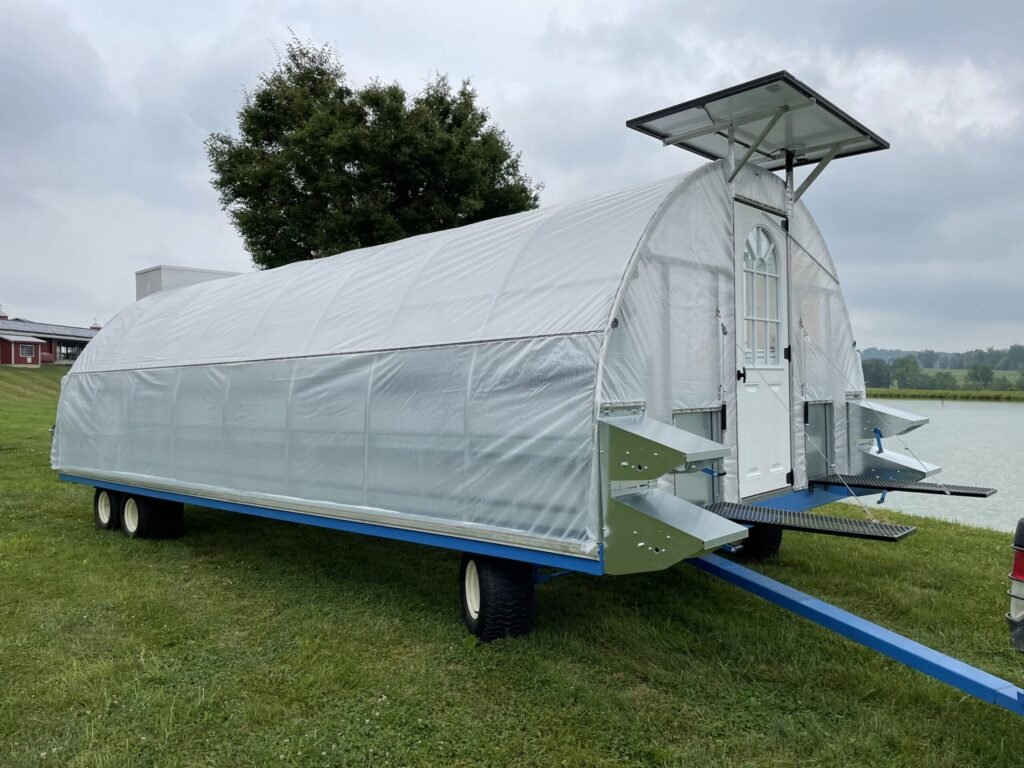
Best For : Commercial & serious farmers running pasture-based egg operations with 500+ birds who need automated systems, rotational grazing capability, and professional-scale production. Ideal for those treating chicken farming as a primary business rather than a hobby or small homestead operation
View more about Mobile Chicken House Model 650
Chicken Wagons
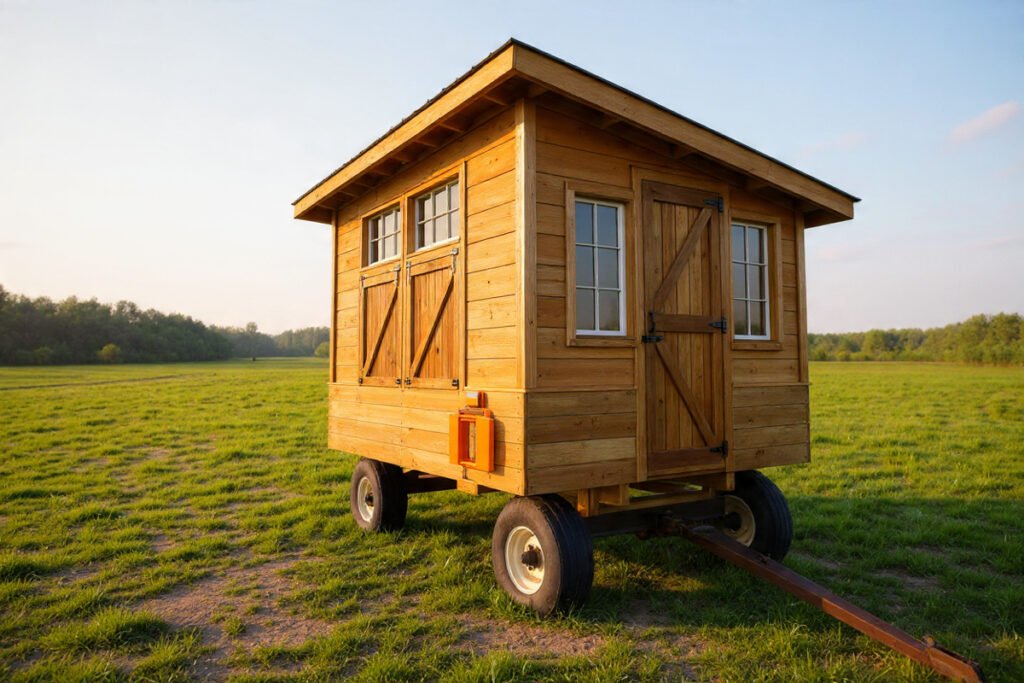
Description:
Chicken wagons are larger, more substantial mobile coops designed for bigger flocks. They typically feature proper wheels, a trailer-like design, and separate areas for roosting, nesting, and foraging. These structures can house 30 to 50 chickens comfortably while still maintaining mobility.
Best for Serious chicken keepers with larger flocks and more space who want a semi-permanent solution that can still be relocated.
Want to explore other options? Read our guide on Chicken Tractor Alternatives
Comparison of mobile chicken coop designs showing relative size and capacity differences
DIY vs. Buying Pre-Built Mobile Chicken Coops
When it comes to acquiring a mobile chicken coop, you have two main options : buying pre-built or building your own. Let’s compare these approaches to help you make the best decision for your situation :
Pre – Built Mobile Coops
DIY with Professional Plans
Note :
For most backyard chicken keepers, building from professional plans offers the best value, quality, and customization. With the right plans, even beginners can create a mobile chicken coop that costs less and lasts longer.
What You Need to Build a Mobile Chicken Coop
Building your own mobile chicken coop is an achievable weekend project with the right preparation. Here’s what you’ll need to get started:
| Basic Materials | Essential Tools |
| -Lumber (2x4s, 2x2s, plywood) -Hardware cloth (1/4″ or 1/2″ – avoid chicken wire for predator protection) -Screws, nails, and hinges -Wheels or skids for mobility -Roofing material (metal, shingles, or heavy-duty tarp) -Nesting box materials -Roosting bars (2x2s work well) | -Drill/driver with bits -Circular saw or handsaw -Measuring tape and square -Hammer -Wire cutters -Safety equipment (gloves, eye protection) |
Time and Skill Requirements
- Most mobile chicken coop builds take 1-2 weekends to complete, depending on the design complexity and your experience level. The good news is that these projects are beginner-friendly with the right plans – if you can measure, cut, and use a drill, you can build a functional coop.
Common Mistakes to Avoid
- Underestimating predator threats: Using chicken wire instead of hardware cloth (predators can tear through chicken wire)
- Making it too heavy: Building with overly thick materials that make moving difficult
- Inadequate ventilation: Sealing the coop too tightly, leading to moisture and ammonia buildup
The key to success is having detailed, professional plans that guide you step-by-step. This eliminates guesswork and ensures your mobile chicken coop is built correctly the first time.
📧

Resources to Help You Build Your Mobile Chicken Coop
Building your own mobile chicken coop can feel overwhelming at first, but having the right resources makes all the difference. Here’s what makes a successful build:
What Good Building Plans Should Include:
- Complete materials list so you buy exactly what you need (no waste, no extra trips)
- Clear cutting diagrams that show exact measurements
- Step-by-step instructions with photos at each stage
- Multiple size options to match your flock size
- Visual guides that show you what it should look like
Why Detailed Plans Save Time and Money:
- No guessing on measurements or materials
- Avoid costly mistakes that require rebuilding
- Build with confidence, even as a beginner
- Finish in half the time compared to figuring it out yourself
Many chicken keepers have successfully built their own coops using professional plans and saved $300-$800 compared to buying pre-built.
Whether you use our plans or create your own, the most important thing is having a clear roadmap before you start.
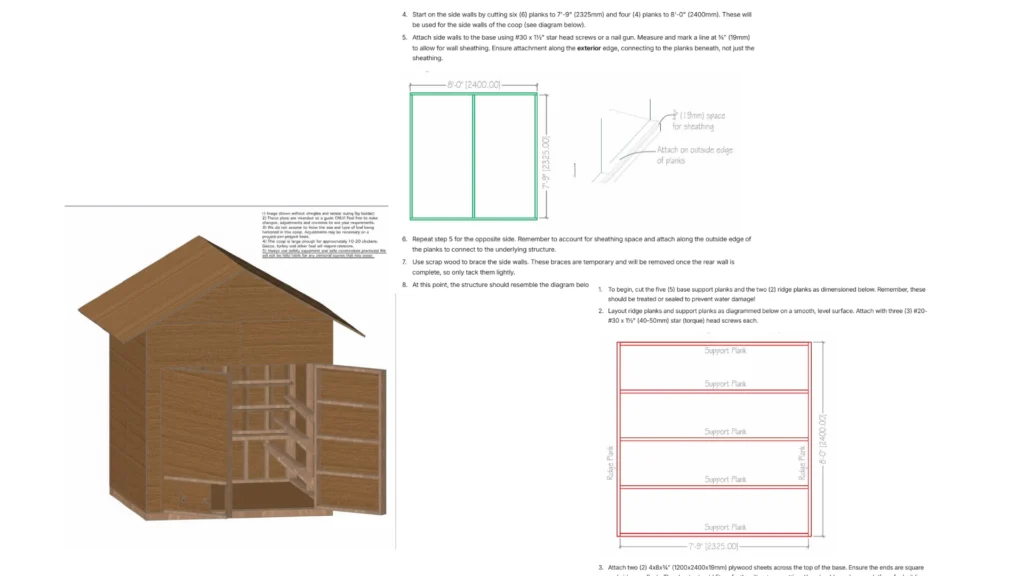
Sample of detailed building plans that make DIY construction straightforward
Frequently Asked Questions About Mobile Chicken Coops
How much does it cost to build a mobile chicken coop?
The cost to build a mobile chicken coop typically ranges from $150-$500 depending on size, materials, and features. This represents a 50-70% savings compared to pre-built options. Using reclaimed or repurposed materials can further reduce costs.
How long does it take to build a mobile chicken coop?
Most DIY mobile chicken coops can be completed in 1-2 weekends (8-16 hours of active work time). Simple designs like A-frames might take just one day, while larger wagon-style coops could require 2-3 days. Having clear, step-by-step plans significantly reduces construction time by eliminating guesswork and planning delays.
What size mobile coop do I need for my chickens?
As a general rule, provide 3-4 square feet of protected coop space per bird and 8-10 square feet of run space per bird. For example, 6 chickens would need approximately 18-24 square feet of coop space and 48-60 square feet of run space. However, since mobile coops are moved regularly to fresh ground, you can sometimes reduce the run space slightly.
How often should I move a mobile chicken coop?
For optimal pasture management and chicken health, move your mobile coop every 1-3 days in warm seasons when chickens are actively foraging. In winter or with less active birds, weekly movement may be sufficient. Watch the ground condition – when grass is noticeably depleted or droppings accumulate, it’s time to move. A well-designed mobile coop makes this process quick and easy.
What’s the best flooring for a mobile chicken coop?
Most successful mobile coops use an open-bottom design with hardware cloth or welded wire 1-2 inches above ground level. This allows chickens to forage while preventing predator access. Some designs use removable solid floors for winter or hardware cloth floors year-round.
Can I build a mobile coop if I have limited DIY experience?
Absolutely! Many beginners successfully build mobile chicken coops with the right plans. Start with simpler designs like A-frames or hoop coops if you’re new to building. The most important skills are basic measuring, cutting, and using a drill – all of which can be learned quickly. Having detailed plans with clear instructions makes the process much more approachable. Check our basic chicken Coop Plans
What’s the best way to make a mobile coop easy to move?
For smaller coops (under 50 sq ft), use 8-10″ wheels on one end and handles on the other for wheelbarrow-style movement. For medium coops, consider four pneumatic (air-filled) wheels with a locking mechanism. For larger coops, implement a trailer-style design with proper axles. Always focus on keeping the overall weight down by using appropriate materials and efficient design.
How do I protect my mobile coop from predators?
Use 1/2″ or 1/4″ hardware cloth (not chicken wire) for all openings and runs. Ensure secure latches on doors that raccoons can’t manipulate. Consider burying hardware cloth 6-12″ around the perimeter or creating an apron that extends outward. For nighttime protection, close chickens in the secure portion of the coop and consider solar-powered predator deterrent lights.
Ready to Build Your Mobile Chicken Coop?
Building your own mobile chicken coop is more achievable than most people think. With some basic tools, a free weekend or two, and a solid plan, you can create a high-quality coop that your chickens will love – all while saving hundreds of dollars.
The key is preparation. Take time to plan your build, gather the right materials, and follow a clear set of instructions. Hundreds of beginners have successfully built their own coops, and you can too.
Share Your Experience With Us
Whether you’re ready to start building or still in the planning phase, we’d love to hear from you!
Have you built a mobile chicken coop? Share your experience, challenges, or successes with our community. Your feedback helps other chicken keepers make better decisions.
Considering a coop project? Tell us what questions you have or what’s holding you back. We’re here to help guide you through the process.
As professional coop builders, we’re always learning and improving. We’re human, and humans make mistakes—but that’s how we grow. Your real-world insights and feedback help us create better resources and designs for everyone in the chicken-keeping community.
Drop us a comment below or reach out directly. Let’s build something great together! 🐔
- Got tips, photos, or lessons learned from your own coop build? We want to see them! Share your story and help fellow chicken enthusiasts on their journey.