Mobile Chicken Run: Fresh Pasture for Healthier Chickens
If you’ve been keeping chickens for a while, you’ve probably seen it happen. That patch of ground where your chickens spend their days slowly transforms from lush green grass into bare dirt and mud. The chickens look bored, pacing the same worn paths day after day, and your beautiful eggs start looking a little pale. Maybe you’ve also watched parasites become a recurring problem, or noticed how the concentrated mess of droppings creates an unhealthy environment. Week by week, the grass around the coop dies back, leaving an expanding dead zone in your yard.
Your chickens deserve better than a muddy, depleted patch of ground — but fencing your entire property isn’t realistic, and free-ranging often feels too risky with predators around. This is exactly the problem a mobile chicken run is designed to solve.
Let’s clear up what we’re talking about here, because there’s sometimes confusion between coops and runs.
A mobile chicken run is the outdoor space where your chickens spend their day – and it moves to fresh grass regularly instead of staying in one muddy spot forever. It’s completely different from a chicken coop, and understanding that difference matters.
Here’s the breakdown: Your chicken coop is the enclosed house where chickens sleep at night and lay their eggs. It’s got solid walls, nesting boxes, roosting bars, and everything they need for nighttime safety and egg production. The chicken run is the outdoor area where they spend their day – it’s open air with wire fencing, giving them access to grass, bugs, and fresh air while keeping them protected. A mobile chicken run is simply that daytime space on wheels or built light enough to move around your property.
Think of it as a safe outdoor playground that relocates every few days or weeks.
Why Mobile Makes Sense
Most chicken keepers end up using one of three approaches, and each has its trade-offs:
Free-ranging (no fencing at all) gives chickens maximum freedom. They can wander anywhere, eat whatever they find, and live their most natural chicken lives. But here’s the reality – predator losses are high. Hawks, foxes, raccoons, neighborhood dogs – they all see free-ranging chickens as easy meals. Plus, chickens with complete freedom will absolutely destroy your garden, poop all over your patio, and probably visit your neighbors’ yards uninvited.
Stationary runs (fixed permanent fencing) solve the predator problem. Your chickens are contained and safe. But that ground they’re standing on? It becomes a disaster. The grass dies within weeks, leaving bare dirt that turns to mud when it rains. Parasites build up in the soil from all those concentrated droppings. The whole area becomes smelly and unhealthy. To prevent this, you’d need a massive stationary run – and most backyards just don’t have that kind of space.
Mobile runs hit the sweet spot between these two extremes. Your chickens get fresh grass regularly, just like free-ranging. They stay safe from predators, just like stationary runs. The ground stays healthy because you’re rotating before damage happens. And you’re using your yard space efficiently – giving chickens access to your whole property over time through rotation, rather than fencing the entire thing at once.
It’s the practical middle ground that actually works for most backyard chicken keepers.
What Mobile Runs Look Like
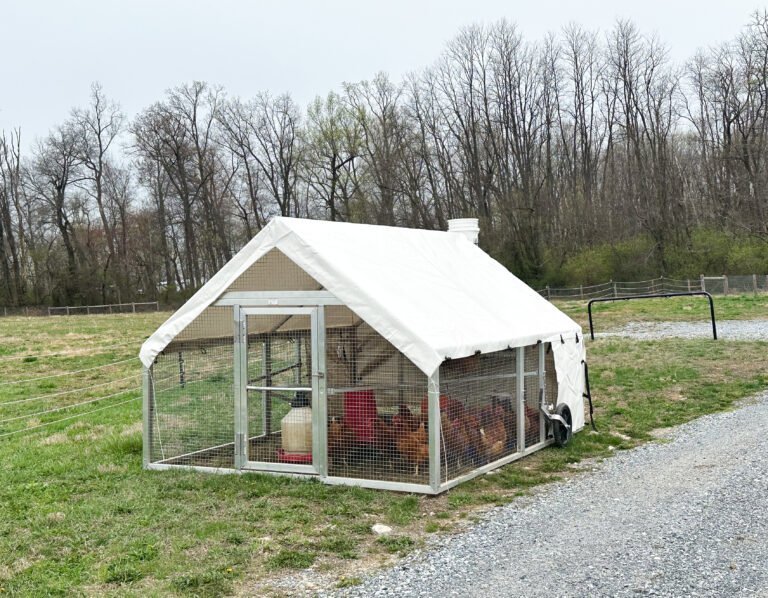
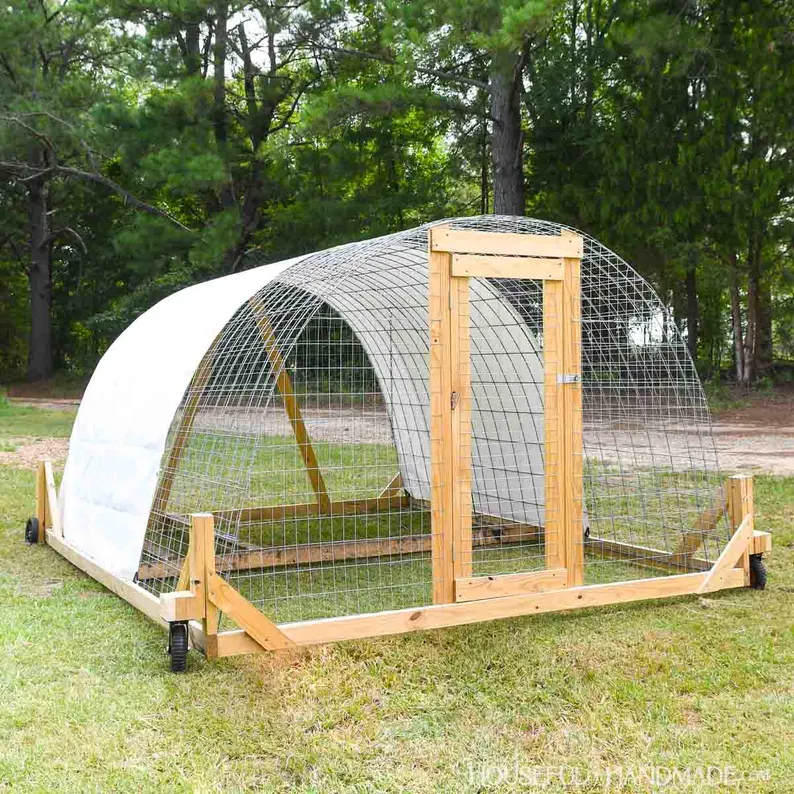
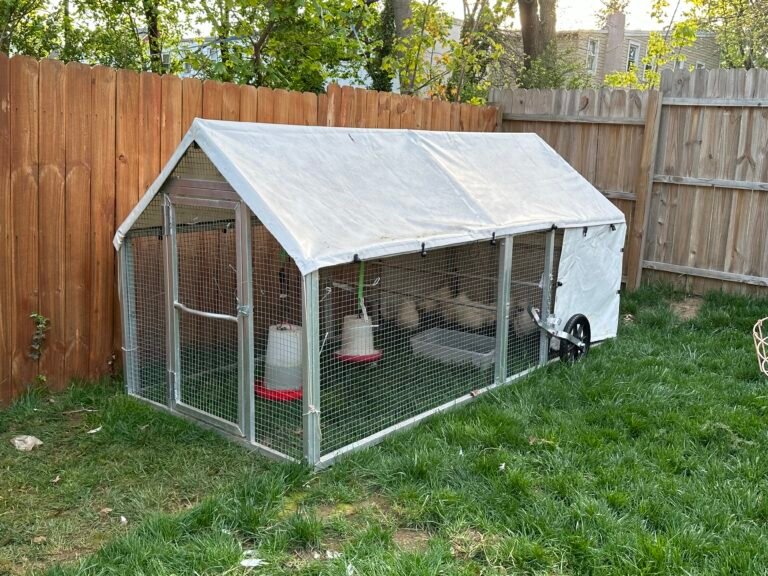
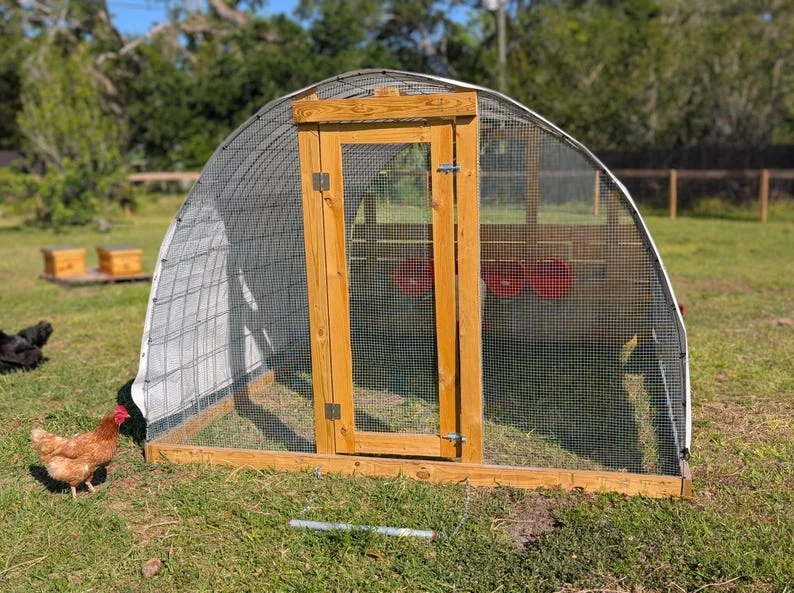
Mobile chicken run are simple structures purpose-built to be dragged across green pasture. The sides are wire mesh or hardware cloth – not solid walls – so chickens can see out and air flows through freely. Most designs have no floor at all, or sometimes a wire floor, which allows chickens direct access to grass and bugs. The whole structure either has wheels attached, or it’s built light enough that one or two people can pick it up and move it.
You can attach a mobile run to any coop – stationary or mobile – or use it as a standalone structure where you bring chickens out during the day and return them to a coop at night. Sizes vary widely depending on your flock, anywhere from 10 square feet for a couple of chickens up to 100+ square feet for larger flocks.
The key feature is mobility. Whether it rolls on wheels or gets carried, the whole point is moving it to fresh ground regularly. That’s what makes all the difference for chicken health and lawn quality.
Benefits of Mobile Chicken Run
Here’s why this setup is such a game-changer for backyard chicken keeping.
Fresh Pasture Access
When you move the run every few days, your chickens get continuous access to fresh grass, clover, weeds, insects, and all the diverse natural foods chickens evolved to eat. This isn’t just nice for them – it fundamentally changes their health. You’ll see stronger immunity, beautiful glossy feathers, more active and alert behavior, and those incredible deep-orange egg yolks that make store-bought eggs look pale by comparison.
The difference is visible within weeks. Chickens eating fresh pasture daily just look healthier. Their eyes are brighter, their combs are redder, their feathers have that sheen that only comes from proper nutrition. It’s what chickens are designed to eat, and their bodies respond accordingly.
With a mobile chicken run, fresh pasture becomes a built-in part of your daily chicken care routine.
Better Eggs – Noticeably Better
This deserves its own section because the difference in eggs is dramatic. Eggs from chickens with regular pasture access have darker, richer yolks – that deep orange color that looks almost unnatural if you’re used to pale store-bought eggs. The taste is richer too. And the nutrition is genuinely better – research shows these eggs contain significantly more omega-3 fatty acids, vitamins A and E, and beta-carotene.
Once you’ve tasted eggs from pasture-raised chickens, grocery store eggs seem bland and watery. Your friends and family will notice the difference immediately. It’s one of those things where the proof is literally on your breakfast plate every morning.
Parasite Control – The Hidden Benefit
Here’s something most people don’t realize until they’ve dealt with parasite problems: stationary runs become parasite breeding grounds. When chickens concentrate their droppings in one area month after month, internal parasites (worms, coccidia, and others) build up in the soil. Those parasites then reinfect your flock in an endless cycle.
Mobile runs break this cycle completely. You’re moving to fresh ground regularly – every week or so – which means parasites never get the chance to build up. The result? Dramatically healthier chickens and way fewer parasite issues. Many mobile run users report almost never needing to worm their flocks, compared to constant problems with stationary setups.
This alone can save you significant money on medications and vet visits, not to mention the peace of mind knowing your flock isn’t constantly battling parasites.
Your Lawn Actually Improves
This surprises people, but it’s one of the best benefits. Instead of creating one huge dead, muddy patch where the run sits permanently, a mobile run distributes your chickens’ activity across your entire yard over time.
Chickens are incredible little workers. They scratch and till the soil, eat pests like grubs and ticks and beetles, and drop natural fertilizer as they go. Move them every week to a new section and that grass comes back greener and healthier than before. It’s like having a small lawn care crew that works for chicken feed (literally).
After a full season of rotating a mobile run through your yard, you’ll see the difference. The grass is thicker, greener, more pest-free. Areas that were previously struggling with grubs or bare patches improve noticeably. Your yard actually benefits from having chickens instead of being destroyed by them.
Predator Protection You Can Trust
Free-ranging sounds idyllic until you lose a chicken to a hawk. Or a fox gets into the yard. Or the neighbor’s dog discovers your flock. It’s heartbreaking, and it happens more often than people expect.
A mobile run keeps your chickens safe behind wire mesh while they’re outside. They get all the benefits of being outdoors – fresh air, natural light, access to grass and bugs – but predators can’t reach them. You get genuine peace of mind, especially if you’re away from home during the day.
Even in suburban areas with fewer obvious predators, hawks are a real threat. A properly constructed mobile run with a top cover eliminates that worry entirely.
Happy, Stimulated Chickens
Chickens are way smarter and more curious than most people realize. The same boring patch of dirt day after day makes them bored, which leads to behavioral problems. Bored chickens pick at each other’s feathers. They fight more. They pace and seem restless. They’re just not content.
Fresh ground every few days changes everything. There are new things to explore, different bugs to hunt, interesting plants to sample, varied scratching opportunities. Mental stimulation keeps chickens happy and healthy. Happy chickens are calm chickens – less fighting, less stress, better behavior overall.
You’ll actually see the difference in how your flock acts. They’re more engaged, more active, more interested in their environment. It’s what chickens are designed for, and they thrive on it.
Actually Affordable
Here’s the practical side: You’re not trying to fence your entire property (which would cost thousands). Instead, you’re giving chickens access to your whole yard over time through rotation. That’s smart use of space and resources.
Plus, you can position the run wherever it’s most useful at any given time. Need pest control in the garden? Move the run there. Want to clear an overgrown area? Chickens will handle it. Summer heat wave? Move to the shaded section of yard. This flexibility makes chicken keeping work better with your property and lifestyle.
Works with Any Setup
Whether you have a stationary coop, a mobile coop, or even just a simple nighttime shelter, a mobile run works with it. Many people attach runs to stationary coops – chickens go in and out during the day, then you close them in the coop at night and move the run to fresh grass. Or use the run as a standalone daytime space.
This flexibility means mobile runs work for everyone, regardless of your current setup or future plans.
Types of Mobile Chicken Runs
Every mobile chicken run falls into one of several practical design styles depending on flock size and movement needs. Here’s what works well in different situations :
Simple Frame Runs :
These are the most basic approach – rectangular frames built from 2×2 lumber or PVC pipe with hardware cloth attached. Usually sized around 4×8 or 6×10 feet. Two people pick up the frame by the edges and carry it to a new spot every few days.
They’re the most affordable option, typically costing $50-$150 in materials. Perfect for small flocks of 4-8 chickens. The lightweight design makes frequent moving easy, though you will need a helper since they’re awkward to carry alone. Great starting point for beginners or anyone on a tight budget.
Two-Wheel Wheelbarrow Runs :
These runs have two wheels (usually 8-12 inches) mounted on one end. You lift the other end like a wheelbarrow and roll it to fresh grass. One person can move them easily, which makes them popular with solo chicken keepers.
They typically measure 6×10 to 8×12 feet and house 6-12 chickens comfortably. Cost runs around $100-$200 in materials. The ability to move it yourself without help is worth the extra cost for many people. Works well on relatively flat ground. Plan on weekly moves rather than every few days, since rolling it is a bit more effort than just setting down a lightweight frame.
Four-Wheel Chicken Run Tractors :
These are the larger options – maybe 8×12 or 10×20 feet – with four pneumatic (air-filled) wheels and a handle or tow bar. Can accommodate 12-20+ chickens depending on size. You can roll them by hand on flat ground, or tow larger versions with a lawn tractor or ATV.
More expensive to build at $200-$400 in materials, but they handle bigger flocks and move surprisingly easily once rolling. Best for homesteaders with larger operations or anyone planning to scale up their flock over time.
Tunnel or Hoop Runs :
Think of these as long, low tunnels – often 10-20 feet or longer – made from wire mesh or bird netting stretched over PVC or metal hoops. Chickens walk through the entire length grazing as they go.
Very affordable at $75-$150, and you can extend the length as needed by adding more sections. These maximize grazing area per dollar spent. The low height (usually 2-3 feet) means you can’t reach in easily to grab chickens or do daily checks, but they’re excellent for serious lawn improvement projects. Good for daytime use when you bring chickens back to a coop at night.
Attached Runs :
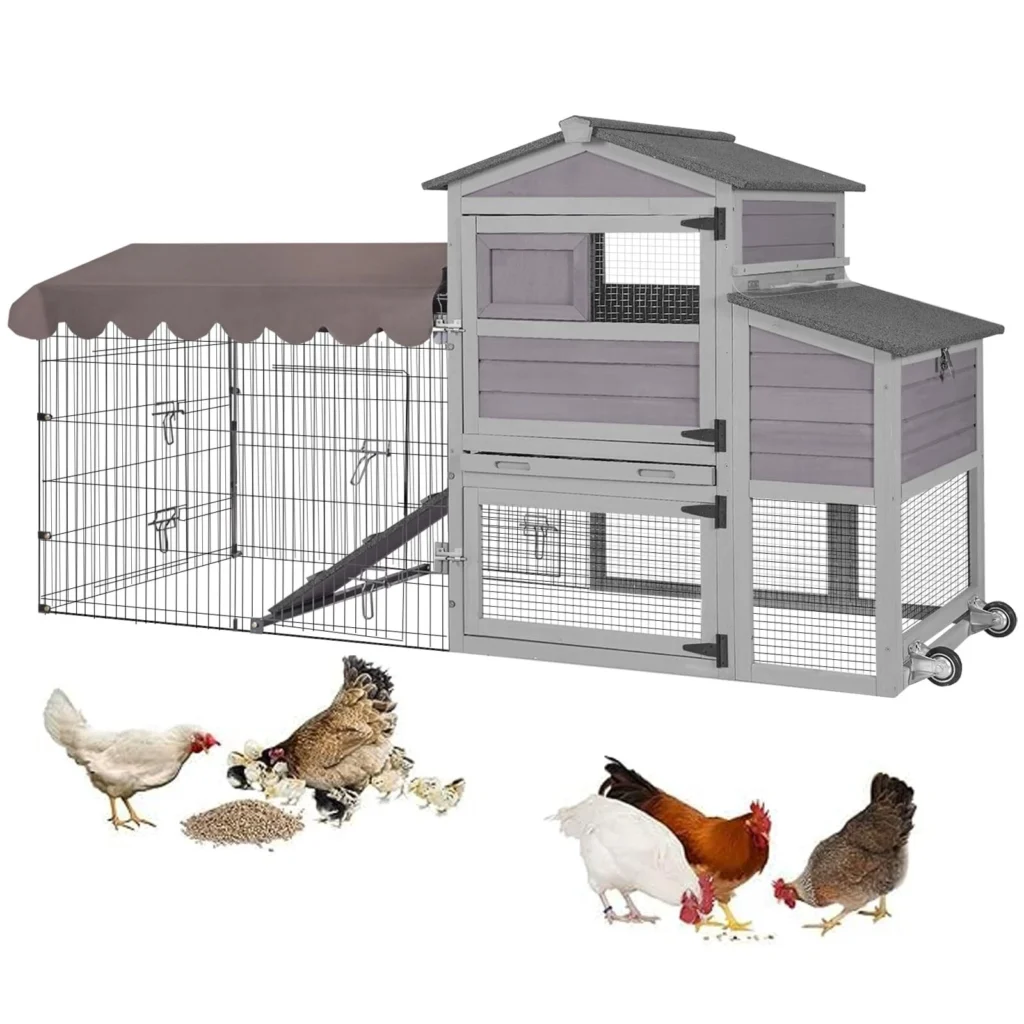
These are runs permanently connected to mobile chicken coops, moving together as one complete unit. The classic chicken tractor concept – housing and grazing space combined in a single structure.
Sizes vary widely depending on flock size and design. More expensive and definitely heavier than standalone runs, but convenient because you only move once and chickens have 24/7 access to both shelter and outdoor space. Good option if you’re starting from scratch and want a complete all-in-one mobile system.
Each style works well in different situations. Pick based on your flock size, how often you want to move it, whether you’ll have help or go solo, and what fits your budget. There’s no single “best” design – it’s about matching the style to your specific needs.
Building vs Buying Pre-Built Runs
When choosing a mobile chicken run, most people must decide between buying pre-built or building their own from scratch.
Pre-Built Runs
Pre-built runs offer obvious convenience. They show up at your door ready to use. No construction skills needed, no tools required, no weekend project. Just set it up and you’re done.
The catch is cost – and it varies significantly based on size. Small runs (maybe 4×6 to 6×8 feet) for 4-8 chickens typically run $300-$800. Medium runs (8×10 to 10×12 feet) for 8-15 chickens cost $800-$1,800. Large runs for bigger flocks can easily hit $2,000-$3,800 or more.
Beyond price, pre-built runs are generic by nature. They’re built for average situations, not your specific property layout, flock size, or movement preferences. Manufacturers often use lighter materials to keep shipping costs down, which sometimes means less durability. And once it arrives, modifying it to fit your needs better is difficult.
DIY mobile runs typically cost $75-$400 in materials depending on size and design. That’s the immediate financial advantage – significant savings compared to pre-built options.
But the real benefit is customization. You get exactly the right size for your flock. The specific movement method that works for you – wheels positioned exactly where they need to be, or handles placed for comfortable carrying. Doors where you want them. Wire mesh quality you choose. Overall strength built in where your situation demands it.
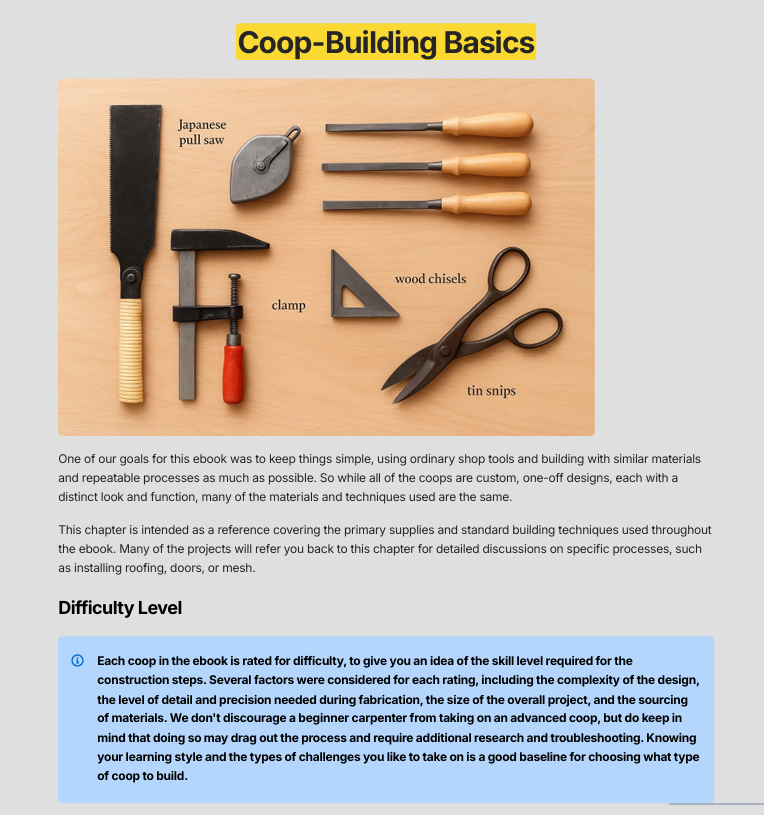
Most designs take a weekend to build. You’ll need basic tools – saw, drill, wire cutters, measuring tape, staple gun – and reasonable DIY skills. Nothing complicated, just measuring carefully and assembling systematically.
The end result is something that fits your situation perfectly. Many backyard chicken keepers find building their own makes more sense – costs less and works better for their specific setup.
Building Your Own Mobile Run
Building a mobile run is actually more straightforward than building a coop, which surprises people. There’s no insulation needed, no nesting boxes to construct, no roosting bars to install, no complex weatherproofing. You’re essentially building a sturdy frame and covering it with wire mesh. That’s it.
Planning Your Build
Start with size. Calculate based on 8-10 square feet per chicken minimum. So six chickens need roughly 48-60 square feet - maybe a 6x8 or 6x10 foot run. More space is always better for chicken happiness and health, but you need to balance that with your ability to actually move the thing. A 6x10 run is manageable. A 12x20 run is heavy and awkward to relocate, which defeats the whole purpose if you end up leaving it in one spot.
Materials You’ll Need
The materials list is simple: Lumber for the frame (2x2s, 2x3s, or 2x4s depending on the strength you need - or PVC pipes if you want ultra-light construction). Hardware cloth or welded wire for covering the sides and top. Wheels if you're building a rolling version. Basic hardware like screws, hinges for doors, and latches. That's about it.

Tools are standard stuff most people already have: saw for cutting lumber, drill for assembly, measuring tape, wire cutters, staple gun for attaching wire mesh. Nothing specialized or expensive.
Choosing Your Movement Method
This is important – decide how you’ll move it BEFORE you start building, because that decision affects everything else.
Carry/lift style needs to be as light as possible. Use 2x2 lumber or PVC pipes. Keep the size moderate. Plan for two people to lift and carry. Works great for small runs moved every 2-3 days.

Two-wheel wheelbarrow style needs wheels positioned on one end and the frame balanced properly. Medium weight is fine since you're rolling, not lifting. One person can handle it. Good for weekly moves.
Four-wheel rolling style can be heavier and larger since all the weight rolls on wheels. You need sturdy wheel mounting and preferably a handle or tow bar. Best for large runs moved weekly or monthly.

Each approach requires different construction decisions, so figure this out first.
Construction Time
Simple carry-style runs typically take 4-6 hours to build. Two-wheel wheelbarrow designs maybe 6-8 hours. Larger four-wheel runs 8-12 hours. Most people complete them in one weekend - Saturday for construction, Sunday for finishing touches and testing.
Key Building Tips
A few things that really matter :
Use hardware cloth or welded wire, not chicken wire. Chicken wire seems cheaper initially, but predators tear through it easily. Hardware cloth (1/2 inch or 1/4 inch mesh) is what you need for real protection.
Include a top cover. Hawks are a genuine threat even in suburban areas. Cover the top with wire mesh or bird netting.

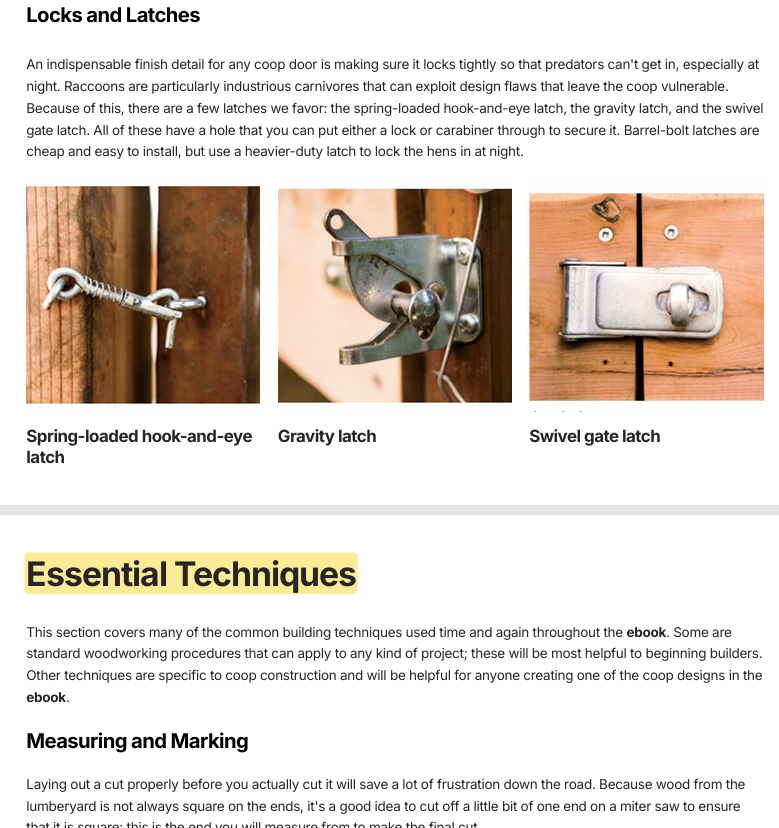
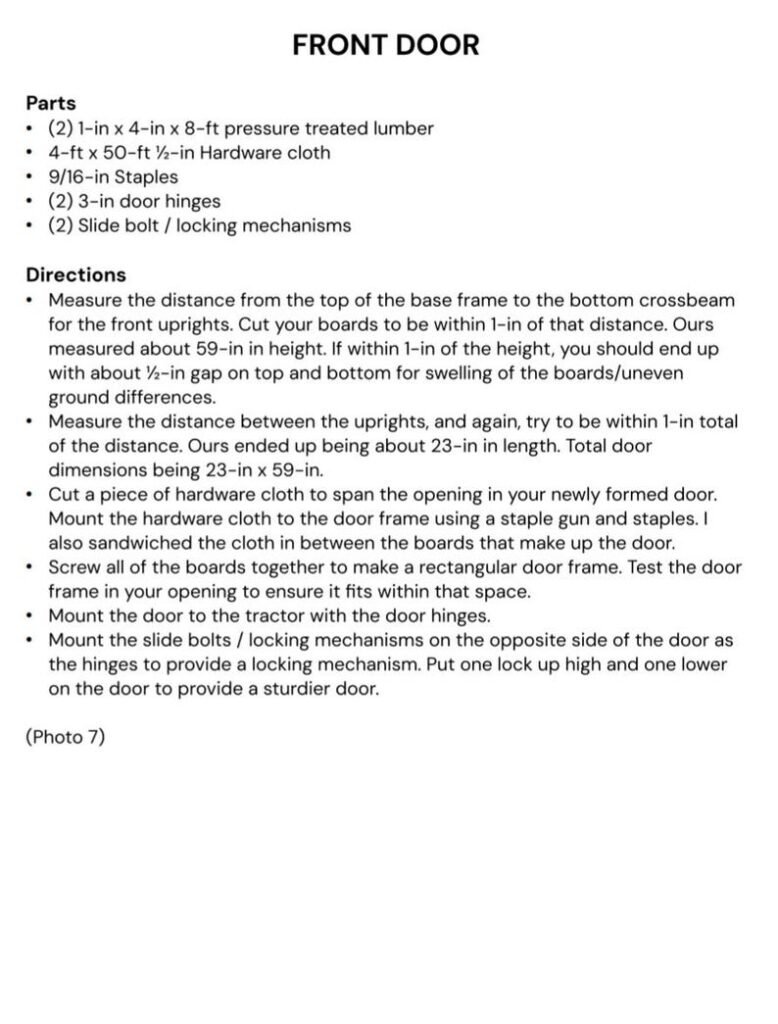
Add a door for accessing chickens. You'll need to catch them occasionally, do health checks, or handle issues. Build in a proper door from the start rather than trying to add one later.

Test the weight as you build. Once you've got the frame assembled, try lifting or rolling it before you add all the wire mesh. If it's already too heavy at the frame stage, it'll be worse when finished. Better to know early and make adjustments.

Think about handle placement if you're building carry-style. Handles or rope grips positioned at natural balance points make a huge difference in how easy it is to move.
The most important thing overall is making sure it's genuinely predator-proof and sized appropriately for however you plan to move it. Get those two things right and everything else is details.
Building with Family – Creating Memories
One of the best parts about building your own mobile run is doing it with your family. Kids absolutely love being involved in chicken projects. They'll remember building that run together - measuring the wood, hammering nails, helping stretch the wire mesh - way more than they'll remember most other weekends.

There's something special about working on a project together that benefits your chickens. Kids take real pride in knowing they helped build something useful. They learn practical skills, sure, but more importantly they're creating memories with you. Years later, they'll still talk about "remember when we built that chicken run together?"

For chicken lovers, especially kids, these hands-on experiences create lasting connections. They're learning where food comes from, how to care for animals, basic building skills, and most importantly, they're spending quality time with family doing something meaningful together. Those are the kinds of memories that stick with kids their whole lives.
So if you have kids, definitely involve them in the build. Give them age-appropriate tasks - even young kids can hand you tools or help with measuring. Older kids can operate tools under supervision. Make it fun, take breaks, and enjoy the process together. The run will work just as well, and you'll have created something more valuable than just a chicken structure.
Resources for Building
Building your first run involves figuring out the right size for your flock, choosing appropriate materials, and understanding the movement method that’ll work best for you. Having clear guidance helps you avoid common mistakes like building too heavy or using the wrong type of wire mesh.
Many chicken keepers have built successful runs using detailed plans that walk through the whole process – complete materials lists, cutting diagrams, assembly steps with photos, everything you need to build confidently. It eliminates the guesswork and ensures you get sizing and construction right the first time.
If you’d like that kind of guidance, we offer building plans for mobile chicken run. Whether you use plans or design your own, proper planning before you start cutting wood makes all the difference between a smooth project and a frustrating one.
Common Questions About Mobile Chicken Run
How often should I move my mobile chicken run?
-A mobile chicken run should be treated like a rotating grazing system to keep grass healthy and parasite levels low. -Every 3-7 days works for most situations, though it depends on your flock size and grass condition. Smaller runs with more chickens need moving more frequently – maybe every 2-3 days .because they’re concentrating more chickens in less space. Larger runs with fewer birds can often stay put for 5-7 days before the grass shows wear.
-The real answer is to watch the ground. When you start seeing bare spots forming or noticeable manure buildup, it’s time to move. In summer when grass grows quickly, you can wait a bit longer between moves. In spring or fall when growth is slower, move more frequently.
Can I attach a mobile run to my stationary coop?
-Absolutely, this is actually a very common setup. Build your run with an opening that aligns with your coop door. During the day, chickens have free access between the coop and run. Every few days, close the coop door to keep chickens inside temporarily, disconnect or move the run to fresh grass, and reconnect it. -You get all the benefits of mobility – fresh grass, parasite control, lawn improvement – without having to move your entire coop. It’s a practical middle ground that works great for most backyard setups.
How big should my mobile chicken run be?
-Plan for a minimum of 8-10 square feet per chicken. So six chickens need at least 48-60 square feet – something like a 6×8 or 6×10 foot run. More space is always better if you can manage it, but balance size against your ability to move it comfortably. -Remember, the whole point is mobility. An enormous run that’s too heavy or awkward to move regularly defeats the purpose. It’s better to have a moderately-sized run you actually move every few days than a huge run you never move because it’s too much hassle.
Do I really need a top cover on my mobile run?
-Yes, highly recommended. Hawks and other aerial predators are a genuine threat, even in suburban neighborhoods. They’re opportunistic hunters and chickens are easy targets from above. Cover your run with hardware cloth, welded wire, or at minimum bird netting. -The only exception might be if you’re always home and physically watching whenever chickens are in the run. But most people can’t realistically supervise constantly, so a top cover provides essential protection.
What’s the difference between a mobile run and a chicken tractor?
-These terms get used interchangeably sometimes, but technically there’s a distinction. A chicken tractor is a combined unit – sleeping quarters (coop) and outdoor run together, moving as one complete structure. A mobile run is just the outdoor exercise area, either used alone or attached to a separate coop. -But honestly, both approaches give chickens regular access to fresh ground, which is the main goal. The terminology isn’t as important as the concept of mobility.
Can one person move a mobile chicken run alone?
-With the right design, definitely. Two-wheel wheelbarrow-style runs are specifically designed for solo operation. Or build a small, lightweight frame using 2×2 lumber or PVC pipes that one person can carry short distances without help. Four-wheel designs also roll easily enough on flat ground that one person can handle them. -The key is planning for solo operation from the beginning. Don’t build a heavy structure and then hope you can move it yourself – design it specifically for one-person movement if that’s your situation.
Will my chickens destroy the grass inside a mobile run?
-Not if you’re moving it frequently enough – and that’s the whole point of making it mobile. The damage comes from chickens being on the same ground for weeks or months. Move every 3-7 days and the grass bounces back quickly, often growing back greener and healthier from the natural fertilization chickens provide. -Stationary runs destroy grass because chickens are there permanently. Mobile runs work because you rotate before lasting damage occurs. Watch your grass condition and move when needed, and you’ll see lawn improvement rather than destruction.
What does it actually cost to build a mobile chicken run?
-Materials typically run $75-$400 depending on what size you build and what materials you choose. Small carry-style runs cost around $75-$150. Medium runs with two wheels maybe $150-$250. Large four-wheel runs $250-$400. Using reclaimed materials can reduce costs significantly. -Compare that to pre-built runs which range from $300 to $3,800+ depending on size. Building your own saves substantial money while getting you exactly what fits your setup.
Ready for Healthier, Happier Chickens?
Giving your chickens a mobile run really does transform their lives and yours. The health benefits are real and visible – those incredible deep-orange yolks, healthier and more active birds, dramatic reduction in parasite problems. Your lawn improves rather than getting destroyed. Eggs taste noticeably better. It’s one of those things where everyone wins.
Building one is simpler than building a coop and usually takes just a weekend. The key is planning for the right size based on your flock and figuring out the movement method that works for your situation.
Your chickens will show their appreciation through those beautiful eggs and active, engaged behavior. There’s genuine satisfaction in watching them happily forage on fresh grass, knowing they’re healthier and safer because of something you built with your own hands.
If you need building guidance.
we offer detailed plans specifically designed for mobile chicken run. Or browse through our other chicken housing guides for more options.
Considering a coop project ? Tell us what questions you have or what’s holding you back. We’re here to help guide you through the process.
As professional coop builders, we’re always learning and improving. We’re human, and humans make mistakes—but that’s how we grow. Your real-world insights and feedback help us create better resources and designs for everyone in the chicken-keeping community.
Got tips, photos, or lessons learned from your own coop build? We want to see them! Share your story and help fellow chicken enthusiasts on their journey.
Drop us a comment below or reach out directly. Let’s build something great together! 🐔