
Portable Chicken Coop: Easy DIY Designs for Small Yards
Moving a heavy chicken coop across your yard can be a backbreaking task. Yet, rotating your chickens to fresh pasture is essential for their health and your lawn’s wellbeing. Pre-built portable chicken coops often cost $300-$800, putting them out of reach for many backyard chicken keepers with limited space.
This guide explores easy-to-move coop designs specifically for small flocks. You’ll discover how to create affordable, functional portable chicken coops that can be relocated by just one or two people without heavy equipment.
Looking for larger wheeled designs? Check out our mobile chicken coop guide with wheels and larger designs. Or explore our Complete guide to chicken tractor alternatives for all housing options.
What Is a Portable Chicken Coop?
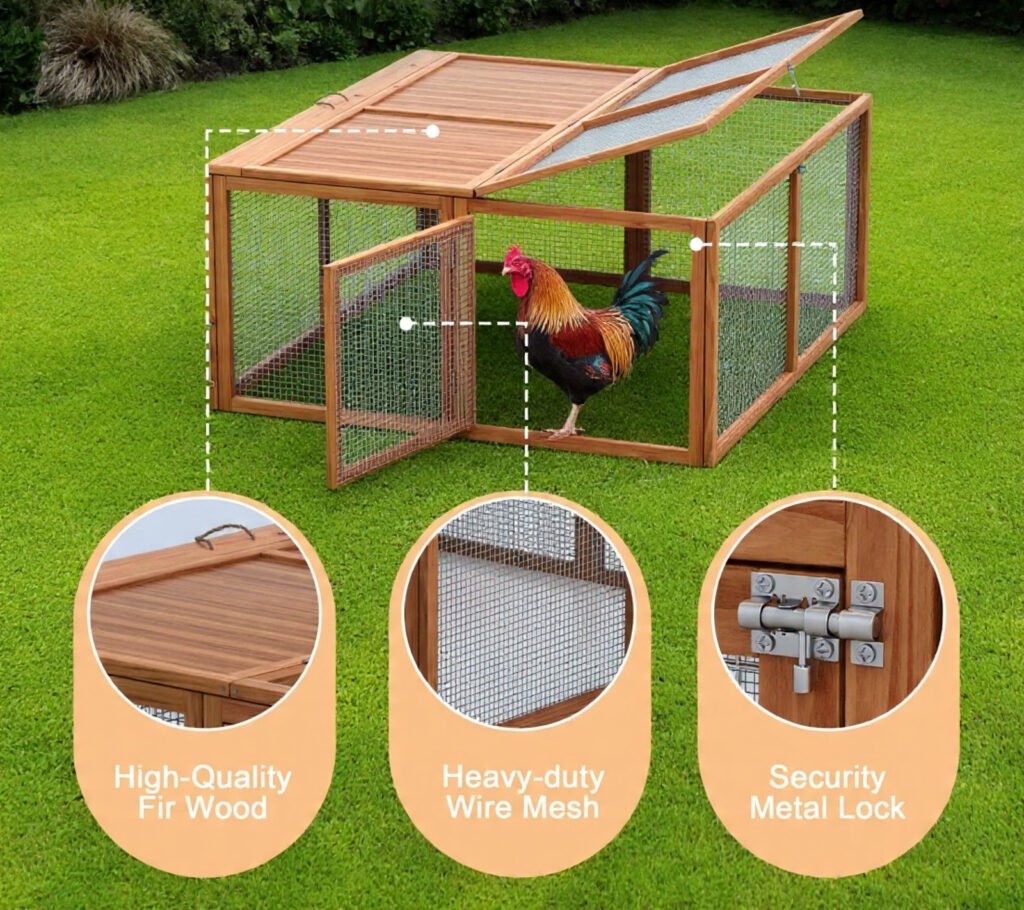
A portable chicken coop is an easy-to-move chicken housing structure designed for frequent relocation around your property. These coops typically house 2-6 chickens and can be moved by 1-2 people without heavy equipment or wheels. Also called a movable chicken pen, these compact structures are perfect for small backyards, urban settings, or anyone wanting to rotate chickens through different yard areas.
Key Characteristics of Portable Chicken Coops
- Easy to move by one or two people without machinery
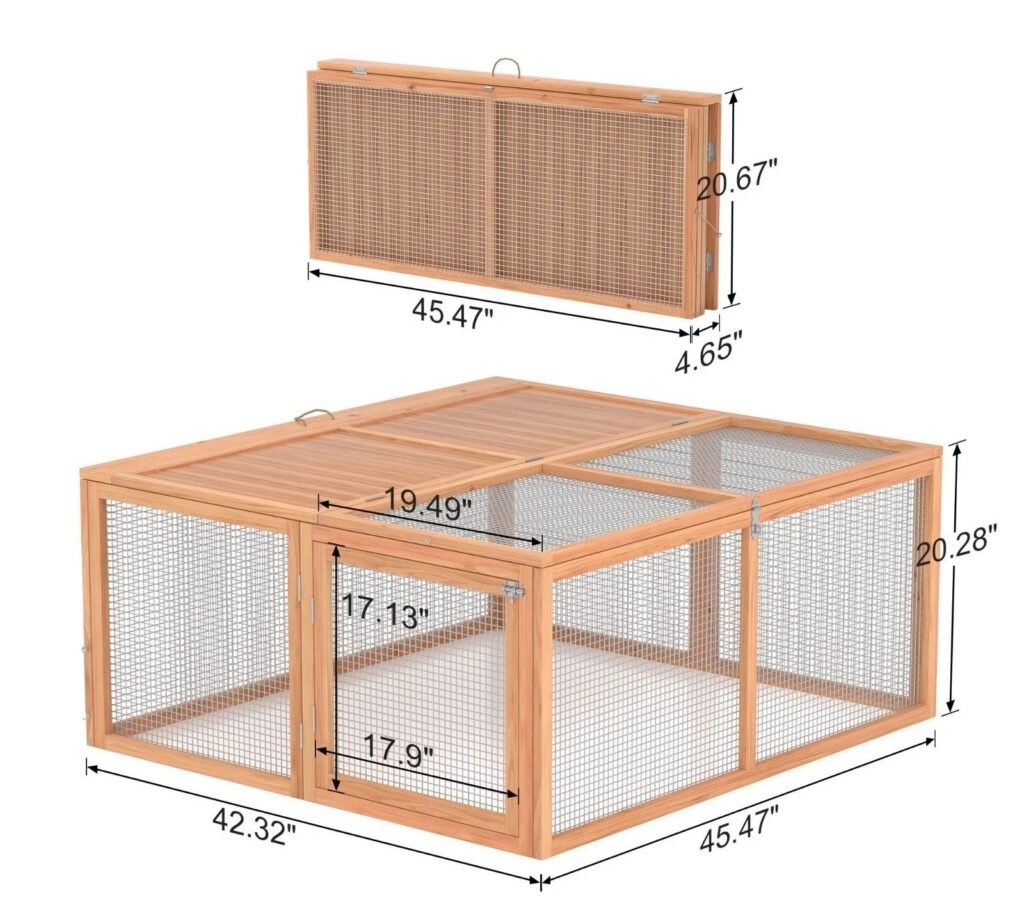
- Compact footprint (typically 8-20 square feet)
- Lightweight construction using 2x2s or 2x3s instead of heavier lumber
- Designed for small flocks (2-6 chickens)
- Flexible placement options throughout your yard
Portable coops work best for small flocks and frequent moves (daily or every few days). If you have a larger flock (8+ chickens) or prefer wheeled designs for less frequent moving, see our Mobile chicken coop guide. This guide focuses on portable designs that prioritize easy movement for small-scale chicken keeping.
Benefits Overview
- Fresh grass and bugs daily for healthier chickens
- Better distribution of chicken manure across your yard
- Improved lawn management without dead spots
- Flexibility in yard placement based on season and needs
Benefits and Advantages of Portable Chicken Coops
Fresh Foraging Daily
Moving your portable chicken coop regularly gives chickens access to fresh grass, insects, and clean ground every day. This natural diet supplementation results in healthier birds with stronger immune systems and richer egg yolks. Unlike stationary coops where ground becomes depleted, portable coops ensure constant access to fresh food sources.
Small Yard Optimization
If you have limited space (under 1,000 sq ft), a portable coop maximizes every inch. Rotate chickens through different sections of your yard, keeping grass healthy and preventing soil damage from overgrazing. This movable chicken pen approach works perfectly for suburban or urban settings where space is at a premium.
Easy One or Two-Person Operation
Well-designed portable coops can be relocated by just one or two people in minutes. No need for tractors, trailers, or heavy equipment. Simple designs make daily or weekly moves effortless, encouraging regular rotation for healthier chickens and better lawn management.
Lower Feed Costs
When chickens forage for part of their diet from fresh pasture, they consume less commercial feed. Many portable coop users report 15-25% savings on feed costs. For a flock of 4-6 birds, this can save $75-$125 annually while providing better nutrition than feed alone.
Better Lawn Health
Instead of one dead patch where a stationary coop sits, portable coops distribute chicken activity across your entire yard. Chickens naturally till, fertilize, and control pests in each area they visit. This results in healthier, greener grass throughout your property instead of bare, damaged spots.
Affordable to Build
Portable coops for small flocks cost $100-$250 to build using basic materials and simple construction. This is 60-75% less than buying pre-built portable coops ($300-$800+). The smaller size and simpler design also means faster build times – most complete in one weekend.
Flexible Placement
Move your coop near the garden for pest control, to shaded areas during summer heat, or to sheltered spots during storms. This adaptability is impossible with fixed coops and difficult with heavy wheeled designs. Position your movable chicken cage wherever it’s most beneficial each season.
Perfect for Renters
If you rent or might move, a portable coop is ideal. Simple designs disassemble easily, fit in a vehicle, and reassemble at your new location. You’re not investing in permanent infrastructure you’ll have to leave behind.
Types of Portable Chicken Coops
Let’s explore the most practical portable coop designs for small flocks. Each style offers different advantages depending on your specific needs and yard setup.
A-Frame Triangle Coops
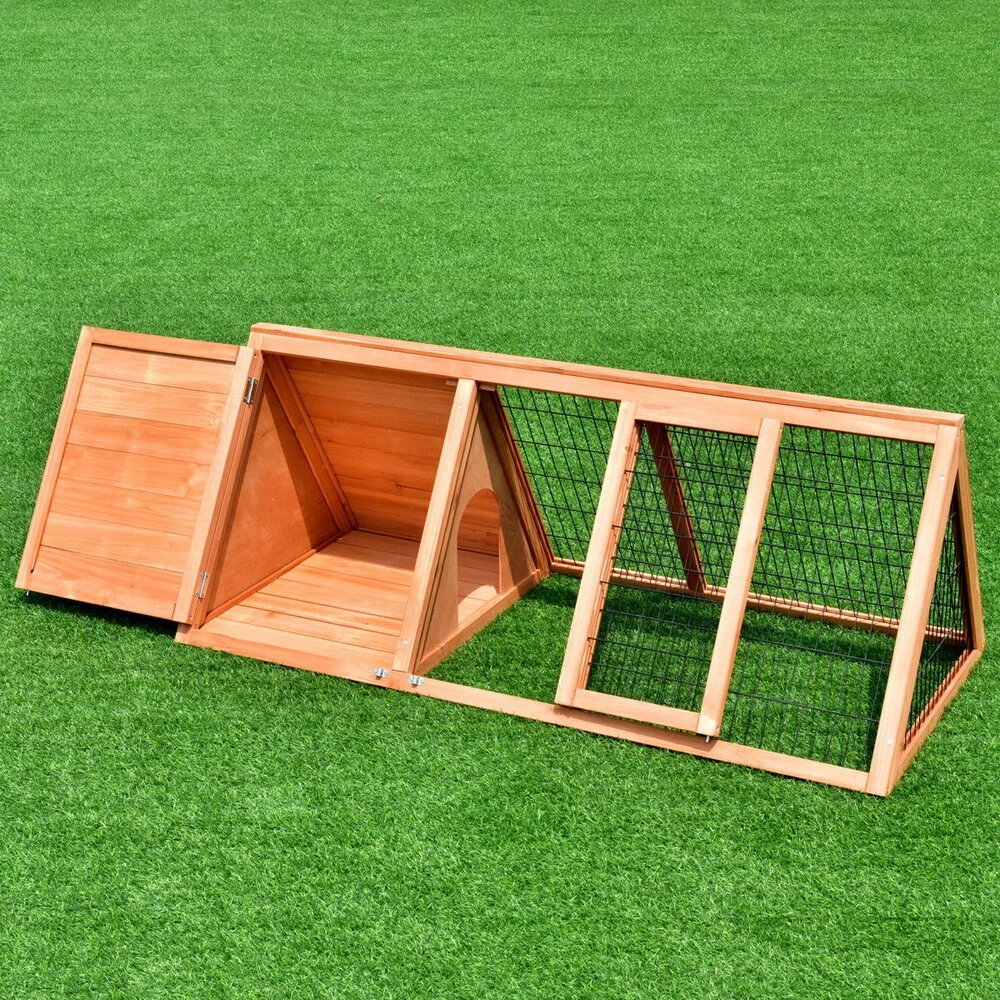
This triangular-shaped hutch is made from solid fir wood with smooth, splinter-free edges. It features two access doors, a separate sleeping area with wooden flooring, and an open-base design perfect for outdoor grass placement. Suitable for small animals like Chicken. Assembly required.
Pros:
- Perfect for beginners with no experience
- Portable and lightweight (15.76 lbs)
- Two doors for easy access and cleaning
- Separate sleeping and run areas with divider
- Open base allows direct grass contact
- Durable fir wood construction
- First-time chicken keepers
- Small yards or urban properties
- Budget-conscious builders
- Those needing portable housing
- Flocks of 2-4 chickens
- DIY enthusiasts
Cons:
- Limited interior height (requires crouching)
- Smaller capacity (2-4 chickens maximum)
- Cleaning requires bending down
- Less headroom for chickens
- May need weather reinforcement in harsh climates
- Requires home assembly
- Wood requires maintenance over time
Best for: Complete beginners, very small yards, 2-4 chickens, budget-conscious builders, portable housing.
Small Chicken Tractors (Bottomless)
These rectangular open-bottom designs are dragged across grass, typically 3×6 or 4×8 feet. They include a sleeping box on one end with a wire-enclosed grazing area and house 3-5 chickens. Some versions have small wheels on one end for easier dragging.
Pros:
- Chickens directly fertilize ground
- Simple construction
- Good ventilation
- Easy daily moves
Cons:
- Requires relatively flat terrain
- Limited weather protection
- Predators can dig under if not supervised
Best for: Those prioritizing fresh pasture and lawn improvement, mild climates, supervised free-ranging
Compact Box Coops with Handles
These small rectangular coops (similar to large dog houses) feature built-in handles or rope grips on sides. They have solid walls, proper roofs, and small nesting boxes inside. Two people carry them to new locations, housing 3-4 chickens.
Pros:
- Better weather and predator protection
- Looks nice in backyard settings
- Real nesting boxes
- Sturdy construction
Cons:
- Requires two people to move
- Takes longer to build
- Heavier than A-frames
Best for: Those wanting durability while maintaining portability, suburban settings, aesthetic appeal matters
PVC Hoop Coops
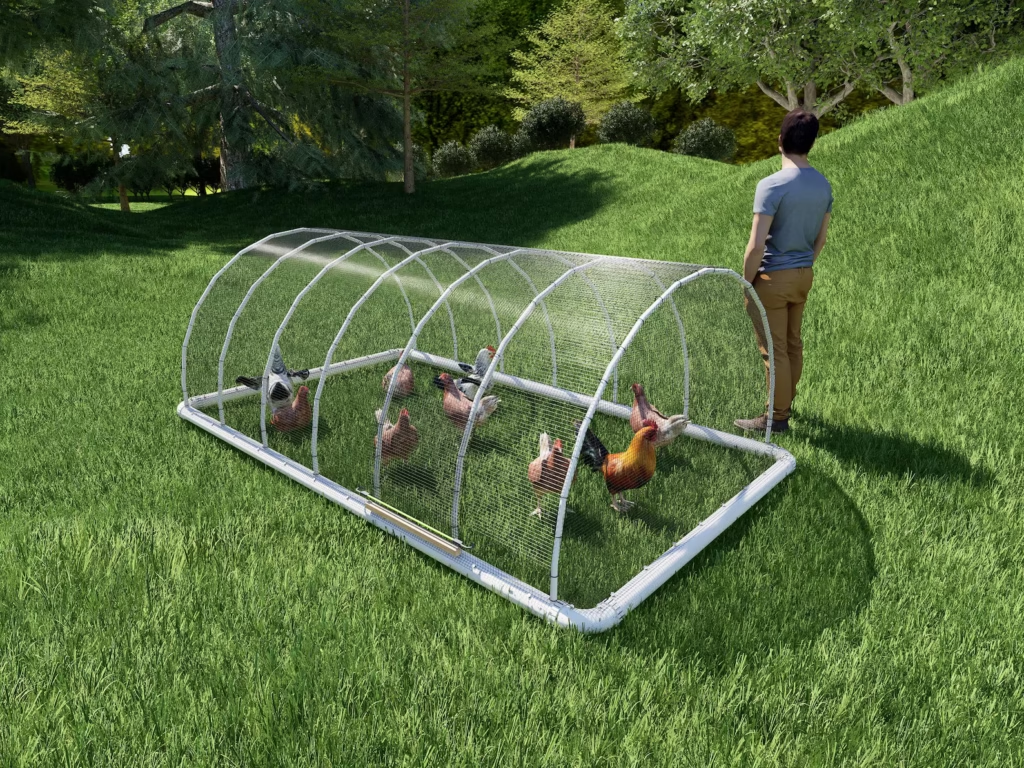
These frames made from PVC pipes are covered with chicken wire and tarp, resembling small greenhouses. They have minimal weight with handles on ends for easy carrying and house 3-5 chickens or more …
Pros:
- Extremely affordable ($60-$120) Not expensive and Easy for beginners.
- Very easy to move
- Quick to build
- Customizable size
Cons:
- Less predator protection than wood
- Tarp needs replacement every 2-3 years
- Can blow in wind
Best for: Temporary housing, budget builds, mild weather areas, those prioritizing easy movement
Small Chicken Run Coop Plans
These elevated sleeping boxes with enclosed runs underneath feature space-efficient vertical designs, an 8-foot footprint. Some have small wheels, others have handles for carrying, housing 2-4 chickens.
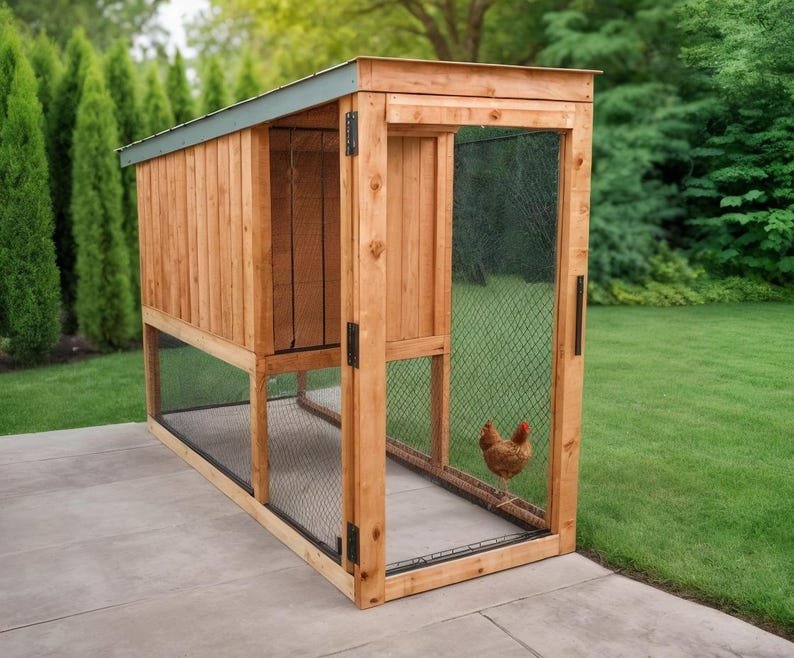
Pros:
- Excellent space efficiency
- Good predator protection
- Protected from ground moisture
Cons:
- Moderate building complexity
- Can be heavier
- Cleaning underneath requires bending
Best for: Very small yards needing vertical space, those wanting multi-level design
These portable designs work best for 2-4 chickens and frequent moving. If you have 6+ chickens or prefer wheeled wagons for weekly moves, check out our mobile chicken coop guide with larger wheeled options .
DIY vs. Buying Pre-Built Portable Coops
When deciding how to acquire your portable chicken coop, you have two main options: buying pre-built or building your own with professional plans. Let’s compare these approaches:
Pre-Built Portable Coops
- Arrives ready to use, no assembly
- No tools or building skills needed
Drawbacks:
- Very expensive ($300-$800 for small 3-5 bird coops)
- Limited size options, rarely find ones for just 2-3 chickens
- Often use cheap materials to reduce costs
- Generic designs don’t fit your specific yard needs
- Heavy shipping costs ($75-$150) for bulky items
- Difficult to modify or repair
DIY with Professional Plans
- Save 65-80% compared to buying ($100-$250 build cost vs $300-$800 pre-built)
- Customize size for your exact flock (2, 3, 4, 5, or 6 chickens)
- Build for easy movement based on who will move it (one person or two)
- Choose quality materials that last 7-10+ years
- Size perfectly for your available space
- Build in one weekend with basic tools
- Easy to repair since you understand the construction
- Modify design for your yard’s challenges
Drawbacks:
- Requires 1-2 days of work
- Need basic tools (saw, drill, measuring tape, wire cutters)
For most backyard chicken keepers with small flocks, building a portable chicken coop from professional plans is the smartest choice. You’ll save hundreds of dollars while getting a coop sized exactly for your space and flock. With good plans, even complete beginners can build a functional, easy-to-move coop in one weekend.
What You Need to Build a Portable Coop
Building your own portable chicken coop is simpler than you might think. Here’s what you’ll need to get started:

Materials Overview
- Framing lumber: 2x2s or 2x3s for most designs (lighter than 2x4s)
- Wire: Hardware cloth (1/2″ or 1/4″ mesh) for predator protection
- Roofing: Corrugated metal or plastic panels, or weatherproof tarp
- Walls: Wire mesh or thin plywood for enclosed sections
- Hardware: Hinges, latches, screws, staples
- Optional: Small wheels (8-10 inch) for one end, rope handles
Basic Tools Required
- Circular saw or hand saw
- Drill with bits
- Measuring tape and square
- Wire cutters
- Staple gun
- Screwdriver
- Basic hand tools
Estimated Time
- Simple designs (A-frame, small tractor): 4-8 hours
- More complex (ark, box coop): 8-12 hours
- Complete in one weekend
Design Considerations
- Size: Keep footprint under 20 sq ft for easy moving
- Weight distribution: Balance sleeping area and run for even carrying
- Movement method: Plan for flip-style, drag, wheels, or handles from the start
- Handle placement: If adding handles, position at natural balance points
Common Mistakes to Avoid
- Using heavy 2×4 lumber everywhere (makes coop unnecessarily heavy)
- No handles or wheels (makes moving difficult)
- Making it too large (harder to move defeats “portable” purpose)
- Skimping on predator protection (use proper hardware cloth, not chicken wire)
- Not testing movement method before completing (add wheels or handles early to test)
The key to success is having detailed, professional plans that guide you step-by-step. This eliminates guesswork and ensures your portable chicken coop is built correctly the first time – easy to move but strong enough to protect your flock.
Resources to Help You Build Your Portable Chicken Coop
Building your own portable chicken coop can feel overwhelming at first, but having the right resources makes all the difference. The main challenge most people face is creating something that’s truly easy to move while still protecting chickens from predators and weather. This is where good plans really help.

What Good Portable Coop Plans Should Include:
- Complete materials list so you buy exactly what you need (no waste, no extra trips)
- Clear cutting diagrams with exact measurements
- Step-by-step instructions with photos at each stage
- Multiple size options for different flock sizes (2, 4, or 6 chickens)
- Movement method details (flip, drag, wheels, or handles)
- Visual guides showing assembly stages
- Predator-proofing techniques
Why Detailed Plans Save Time and Money:
- No guessing on measurements or materials
- Avoid costly mistakes that require rebuilding
- Build with confidence, even as a beginner
- Finish in half the time compared to figuring it out yourself
- Get the size and movement method right the first time
Many chicken keepers have successfully built portable coops using professional plans and saved $400-$600 compared to buying pre-built, while getting exactly the size and style they need.
If you’d like to see what comprehensive building plans look like, we’ve created detailed guides that include everything mentioned above. Check out our portable coop building plans
Whether you use our plans or create your own, the most important thing is having a clear roadmap before you start building.
Frequently Asked Questions About Portable Chicken Coops
How much does it cost to build a portable chicken coop?
Building a DIY portable chicken coop typically costs $100-$250 depending on size, materials, and features. Simple A-frame designs cost $75-$125, while more complex box coops or arks cost $150-$250. This is 65-80% less than buying pre-built portable coops which cost $300-$800. The smaller size means less materials and lower costs overall.
How long does it take to build a portable chicken coop?
Most portable coops for small flocks take 1-2 days to build. Simple designs like A-frames or basic tractors can be completed in 4-8 hours. More complex designs with elevated sleeping areas or multiple compartments take 8-12 hours. With clear plans, most people finish in one weekend. Having detailed building plans really helps with this – complete step-by-step instructions that help beginners build confidently and avoid time-consuming mistakes.
How many chickens fit in a portable chicken coop?
Most portable coops accommodate 2-6 chickens comfortably. Plan for 3-4 square feet per chicken inside the sleeping area. A typical 12-16 square foot portable coop houses 3-5 chickens perfectly. Going larger than 6 chickens makes the coop harder to move and defeats the “portable” purpose.
What’s the easiest way to move a portable chicken coop?
The easiest methods are: (1) Flip-style for A-frames – just flip end-over-end, no lifting, (2) Wheelbarrow style – small wheels on one end, lift and roll the other end, (3) Drag – bottomless tractors slide across grass. Choose based on who will move it and how often. Daily movers prefer flip or wheelbarrow methods.
How often should I move a portable chicken coop?
For optimal results, move your portable coop every 1-3 days. This gives chickens fresh grass and insects while preventing ground damage. In summer when grass grows fast, move every 1-2 days. In winter or dormant seasons, every 3-5 days works. Watch the ground – when grass looks depleted or droppings accumulate, it’s time to move.
Do portable coops protect against predators?
Yes, when built correctly! Use 1/2″ or 1/4″ hardware cloth (never chicken wire) for all openings. Add secure latches that raccoons can’t open. For bottomless tractors, supervise chickens during the day and move them to secure housing at night. Portable doesn’t mean less safe – proper materials and construction provide excellent predator protection.
Can I build a portable coop if I’m a beginner?
Absolutely! Portable coops are actually great beginner projects because they’re smaller and simpler than large permanent coops. If you can measure, cut wood, and use a drill, you can build one. Start with simple designs like A-frames which require minimal materials and basic construction skills.
What’s the difference between portable coops and mobile coops?
Portable coops are typically smaller (2-6 chickens), simpler designs that are easy to move frequently by 1-2 people. Mobile coops are usually larger (8+ chickens), have wheels or permanent bases, and are moved less frequently. Portable coops work best for small yards and daily moves, while mobile coops suit larger properties and weekly rotations.
Ready to Build Your Portable Chicken Coop?
Building your own portable chicken coop is perfect for small-yard chicken keepers who want healthy, happy chickens with access to fresh pasture. With simple designs and basic materials, you can create an easy-to-move coop that costs a fraction of pre-built options and gives your small flock everything they need.
The key is choosing the right design for your space, flock size, and how often you’ll move it. Hundreds of beginners have successfully built portable coops – many completing them in just one weekend.
Share Your Experience With Us
Whether you’re ready to start building or still planning your approach, we’re here to help. If you’d like detailed plans to guide your build, you can explore our Chicken Coop Plans
here. Or browse more of our guides on chicken housing options.
Have you built a mobile chicken coop? Share your experience, challenges, or successes with our community. Your feedback helps other chicken keepers make better decisions.
Considering a coop project? Tell us what questions you have or what’s holding you back. We’re here to help guide you through the process.
As professional coop builders, we’re always learning and improving. We’re human, and humans make mistakes—but that’s how we grow. Your real-world insights and feedback help us create better resources and designs for everyone in the chicken-keeping community.
Drop us a comment below or reach out directly. Let’s build something great together! 🐔
- Got tips, photos, or lessons learned from your own coop build? We want to see them! Share your story and help fellow chicken enthusiasts on their journey.